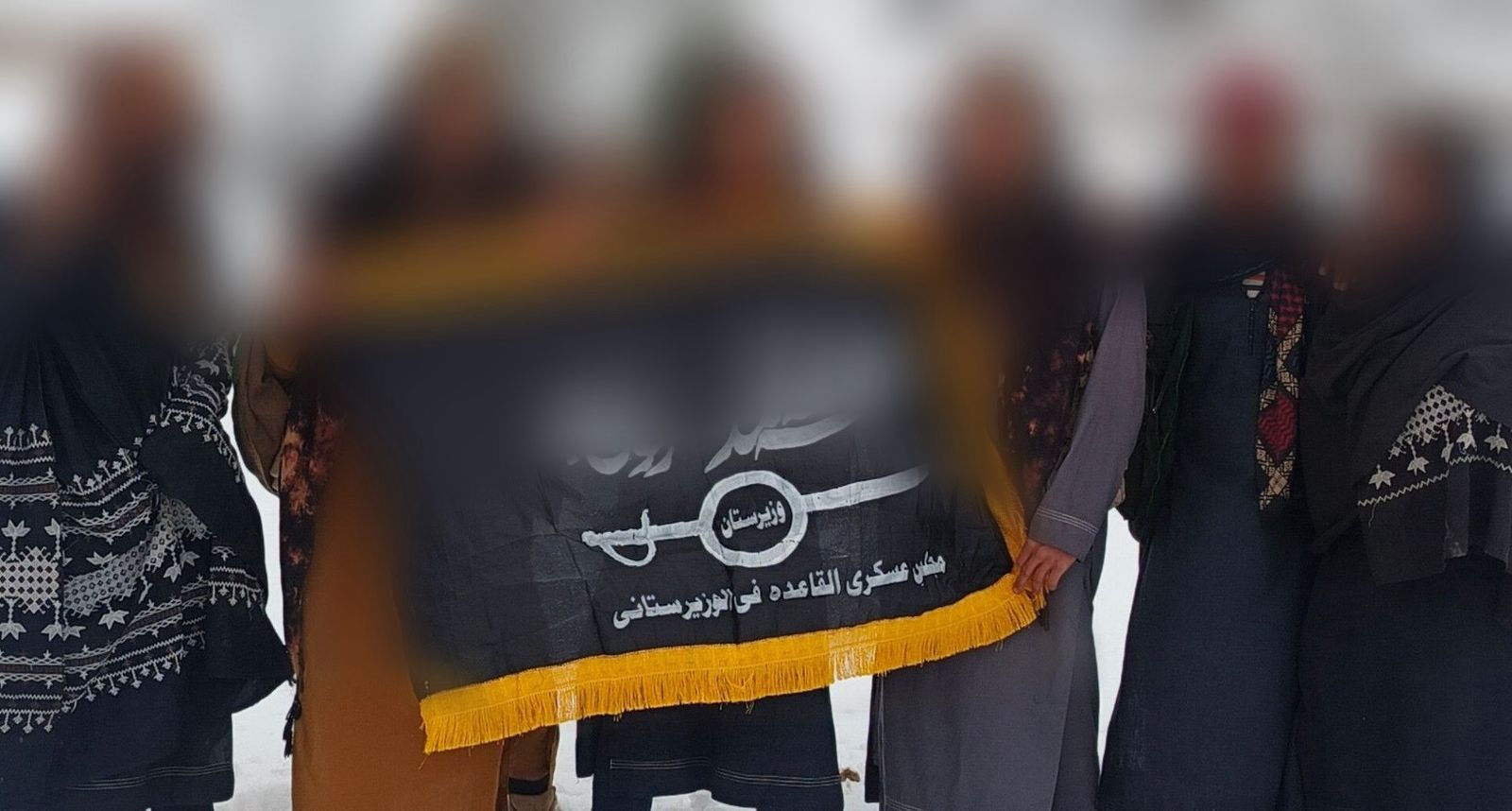
Majlis-e-Askari Karwan (MAK) is a Pakistani Taliban militant group that has steadily carved out space for itself among larger and more dominant factions. Known for its pragmatic strategy, MAK frequently collaborates with a range of militant groups, positioning itself as a flexible local actor that adds operational and strategic value to others.
In recent months, the group has demonstrated noticeable growth in both capability and ambition, emerging as an increasingly relevant faction within the militant landscape of Khyber Pakhtunkhwa and the former tribal districts.
Leadership and Fragmentation
MAK is led by veteran jihadist commander Akhtar Muhammad Khalil Mansoor. Until 2021, Akhtar Khalil served as a Tehreek-e-Taliban Pakistan (TTP) commander in Bannu district. Due to internal differences with the TTP leadership over the command structure in North Waziristan and recent mergers allowed by the TTP, he later joined the Hafiz Gul Bahadur (HGB) faction, now known as Tehreek-e-Taliban Ghazwatul Hind (TTG).
Between 2021 and 2022, his faction weakened as rival local commanders rose in prominence, leading to a loss of influence. Several commanders who had previously operated under him formed their own factions and aligned independently with HGB. Among them was Sadar Hayat, also known as Abu Sufyan, who now leads the Jabhat al-Junood al-Mahdi subfaction of TTG and previously served as deputy head of MAK.
In 2024, Akhtar Khalil attempted to forge an alliance with the TTP faction Jamaatul Ahrar (JuA), engaging in discussions with JuA political leader Sarbakaf Mohmand. The effort collapsed after TTP intervened to placate JuA, which ultimately refused to merge with MAK.
Akhtar Khalil has also maintained a history of informal engagement with Islamic State Khorasan Province (ISKP). When ISKP first emerged in eastern Afghanistan under former Pakistani Taliban commanders, Khalil sought to benefit from its rising strength by maintaining contacts and briefly collaborating, though without openly aligning himself with the group.
It is worth noticing that prior to these events, Akhtar Khalil used to host Al-Qaida leaders in Waziristan as well as cooperate with Al-Qaida, fighting under its banner, until 2014 and Pakistan’s Zarb-e-Azb Operation. Shortly after Pakistan’s military intervention, Akhtar Khalil joined the TTP, remaining with the latter until 2021.
Operational Footprint
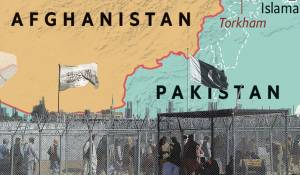
MAK primarily operates in Bannu, Lakki Marwat, and North Waziristan, while also maintaining a presence in Khyber and Orakzai. Since mid-2025, the group has carried out approximately 30 attacks across these regions.
Most operations have been concentrated in southern Bannu, particularly in Jani Khel, Ali Khel, Wali Noor, Nikori, Howaid, and Seentanga, areas near the Lakki Marwat border where the group is also active. Its tactics typically include sniper attacks, ambushes, raids, and assaults on security checkposts and small forts.

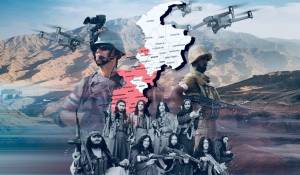
Core areas of main attacks claimed by MAK between mid-2025 to February 2026 in North Waziristan, Bannu, and Lakki Marwat.
In Khyber district, MAK has conducted limited operations in parts of the Tirah Valley, largely in coordination with stronger factions. The group collaborates closely with JuA and Tehreek-e-Lashkar-e-Islam Pakistan (TLIP), sometimes refraining from openly claiming responsibility despite video evidence suggesting its involvement. This indicates a calculated approach in which militants are deployed either to execute attacks or to support allied organisations. For instance, In October 2025, MAK reported that three of its militants were killed in Orakzai while travelling from Khyber to North Waziristan, underscoring its cross-district mobility.

Statement issued by MAK on occasion of the death of the three militants
The group’s cooperative approach extends beyond Khyber. On November 3, 2025, MAK claimed a joint attack with TTP in the Ghazi Khel area of Lakki Marwat. At the time, TTP had reduced public claims amid tensions between Afghanistan and Pakistan, instead relying on proxy groups to acknowledge attacks. MAK collaborated with one such proxy, Lashkar-e-Defa al-Quds (LDQ), jointly claiming some operations in Jani Khel.

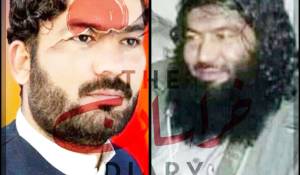
Left: LDQ claim fo the Wali Noor, jani Khel sniper attack targeting security cameras. Right: MAK claim for the same attack.
Although smaller than major Pakistani Taliban factions, MAK occasionally attracts individual commanders. In December 2025, spokesman Abdullah Waziristani announced that Qari Ababil, a local commander from Haider Khel in North Waziristan, had pledged allegiance to Akhtar Khalil along with his fighters. Such defections, however, remain limited compared to larger factions.
A More Ambitious 2026
At the start of 2026, MAK signalled growing ambition through two significant developments.
On January 6, 2026, the group released a detailed organisational chart outlining its internal structure. A previous chart issued in February 2025 had presented a relatively simple framework, listing a military chief, an intelligence chief, a commander of military units, and the head of an economic wing, alongside three operational zones: Mir Ali, Seentanga, and Khyber.
The 2026 chart reflected expansion. It introduced a general commander, replacing the military chief, and added a reform commission tasked with overseeing militant activities, a model previously adopted by TTG and other factions. New operational areas were designated under specific commanders, including Datta Khel, Lakki Marwat, and Khaisoor. Each role now includes a deputy, suggesting an effort to institutionalise command structures.
New and existing affiliates were integrated into the updated framework. Previously mentioned Qari Ababil was appointed commander-in-chief for Datta Khel, while former economic and intelligence chiefs Miwan and Maliyar transitioned to the reform commission. The creation of this commission aligns with broader shifts among Pakistani Taliban factions toward more structured and bureaucratic organisational models since 2023.
The second development was the release of a professionally produced training video. While such content is common among Pakistani Taliban factions, MAK’s latest production closely resembled that of larger groups such as TTP, TTG, and Harakat Inqilab-e-Islami Pakistan (IIP). For the first time, the group unveiled its Saad Bin Abu Waqas training camp. The video shows at least 18 militants in military fatigues undergoing physical drills and weapons training with firearms, RPGs, and machine guns.

Footage of MAK militants training
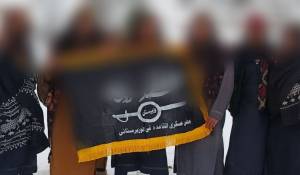
Its rhetorical tone is notable. MAK uses Arabic nasheeds inspired by al-Qaida, and commanders repeatedly reference Palestine and Jerusalem rather than focusing solely on Pakistan or Afghanistan. Since 2023, MAK has referred to itself as “Al-Qaida in Waziristan” and adopted stylistic elements associated with al-Qaida. While initially dismissed by some observers as branding, sources within militant circles suggest limited-scale collaboration with al-Qaida in the Indian Subcontinent (AQIS), often driven by tactical or personal considerations.
AQIS’s influence is visible in the broader ambitions of non-TTP factions. In October 2025, TTG claimed responsibility for an attack in Kashmir, though this remained unverified. More recently, an improvised explosive device attack in Tangir, Diamer district, Gilgit-Baltistan, was claimed by TTP, TTG, and MAK. Kashmir and Gilgit-Baltistan are considered priority theatres for AQIS due to their strategic proximity to India.

MAK claim for the attack in Gilgit-Baltistan
A Pragmatic Militant Actor
MAK is estimated to have around 150 militants. According to militant sources, MAK is not part of the IMP and is not affiliated with the TTG. However, it cooperates with everyone. While operating as a jihadist faction, security officials report that the group is also involved in criminal activities such as extortion, kidnapping, and robbery.
Akhtar Khalil maintains longstanding ties with elements of the Haqqani network and Afghan Taliban figures linked to Sirajuddin Haqqani. His survival across shifting militant alignments reflects a pattern of opportunism and pragmatic cooperation.
As tensions persist among Pakistani Taliban factions, MAK’s ability to manoeuvre between rival groups may enhance its relevance. Although still smaller than dominant factions, its expanding structure, collaborative strategy, and ideological signalling suggest a group seeking to elevate its standing within an increasingly fragmented militant landscape.